
250 years on: what the long view teaches patient investors


🔵 Two days ago, America turned 250 years old. The Fourth of July 2026 — the Semiquincentennial, to use the formal word — marked two and a half centuries since the Declaration of Independence was signed in Philadelphia. Most of us reading this have personally lived through a fair slice of that story: a fifth of it, or more. That is worth pausing on. Between the fireworks and the family gatherings, a milestone like this offers something a normal news week rarely does — a reason to step back and take the long view. So today, rather than parse the latest data point, let's do exactly that: look at what endures, what this holiday cost, and what 250 years can teach anyone trying to protect income and stay steady.
Key points
- The nation marked its 250th birthday on July 4 — a rare, once-in-a-generation milestone.
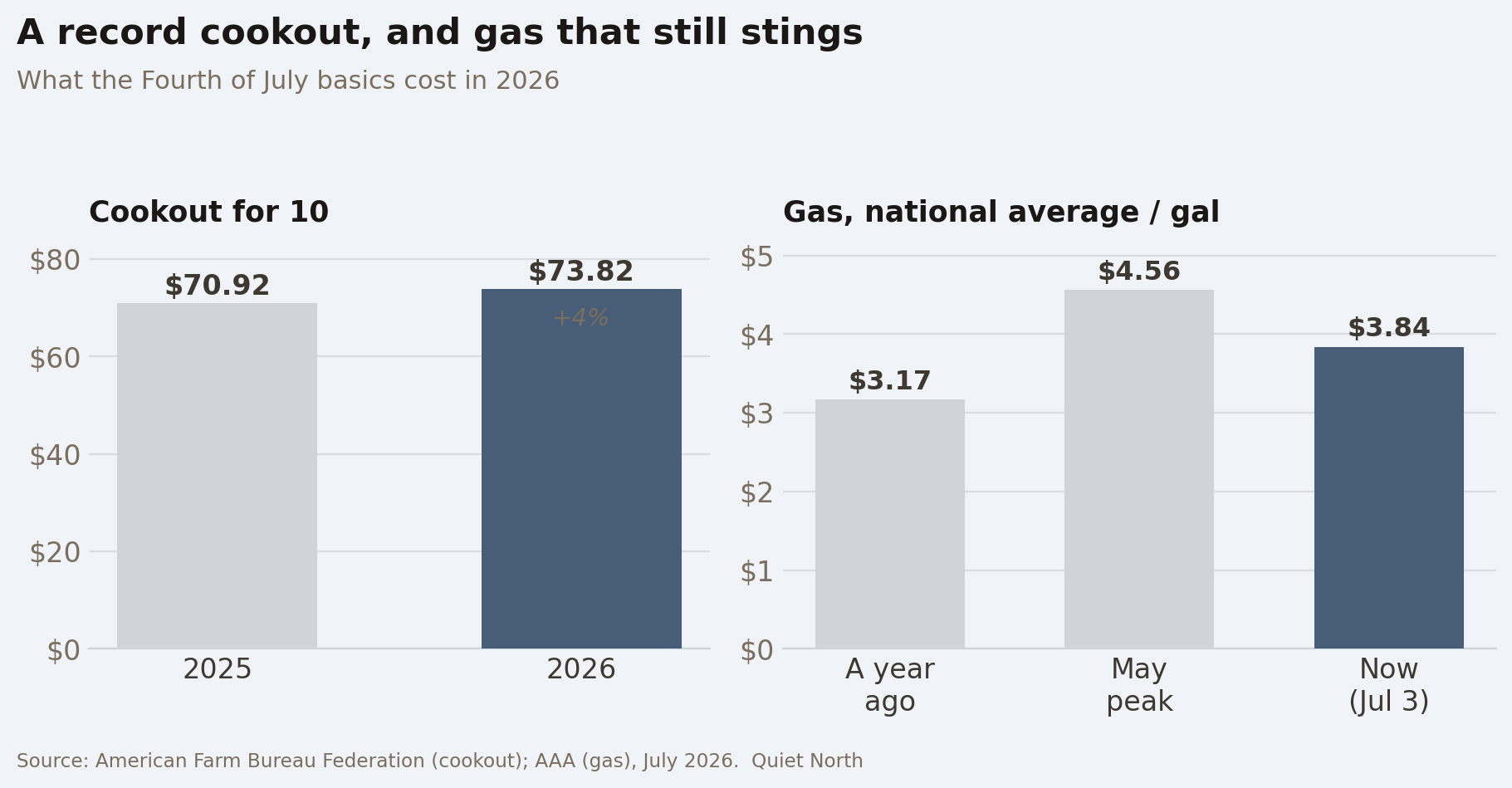
- The holiday itself cost a little more: a Farm Bureau cookout for ten hit a 10-year high of $73.82, up 4%.
- Markets closed the pre-holiday week strong, with the Dow finishing at a record before reopening today.

Markets reopen today after the Independence Day holiday.
Let's start with the texture of the weekend itself, because the numbers tell an honest story about where household budgets stand in 2026.
The holiday cost a little more — a familiar, manageable squeeze
If your cookout felt pricier this year, you were not imagining it. The American Farm Bureau Federation's annual survey found that a Fourth of July spread for ten people cost $73.82 in 2026 — about $7.38 a plate, and a 10-year high. That is up 4% from last year, almost exactly matching the broader inflation rate. A few items did the heavy lifting:
- Pork and beans rose 13.8%, largely on the cost of the aluminum can.
- Strawberries climbed 12.4%, after a spring frost in Florida damaged young plants.
- Ground beef sat near its highest level in a decade.
At the pump, drivers paid a national average of about $3.84 a gallon — down meaningfully from May's $4.56 peak as oil retreated toward pre-war levels, but still nearly 70 cents higher than a year ago. It ranked as the third-most-expensive Fourth of July on record for gasoline.

And yet — and this is the part worth holding onto — a record 72.2 million Americans still traveled for the holiday. People adjusted rather than retreated: shorter trips, closer destinations, backyard potlucks instead of big outings. That is what cost-of-living pressure looks like in practice. Not panic, but careful choices. It is the same instinct that has carried households through far harder stretches over the decades.
Which brings us to the longer story.
The long view: 250 years of getting through
A 250th birthday is an invitation to zoom out, and the view from up there is reassuring. Over the country's history — and even just over the fifty-odd years many of us have been investing — the economy has weathered depressions, oil shocks, double-digit inflation, market crashes, and a pandemic. Each felt, at the time, like it might be different. Each was, eventually, followed by recovery.
Consider just the setbacks within recent memory: the crash of 1987, the dot-com collapse of 2000, the financial crisis of 2008, and the pandemic plunge of 2020. Every one of them was frightening in the moment. Every one of them was, in time, surpassed by a new high.
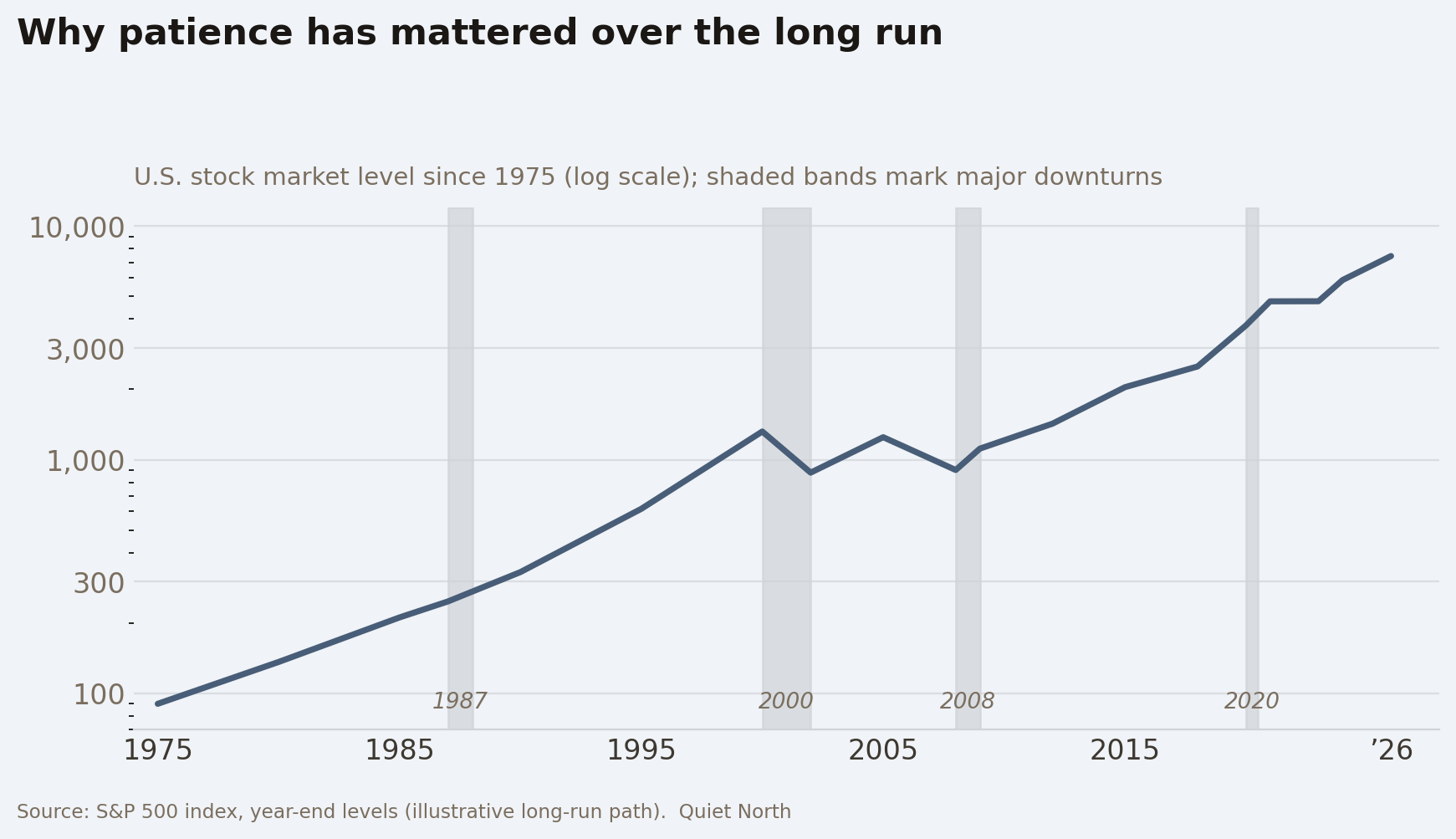
This is not a promise that markets always rise, or that the next recovery will match the last. It is a more modest and durable observation: the long run has rewarded patience far more reliably than it has rewarded reaction. For an income-focused investor, that is the whole game. The retiree who stayed invested through 2008, kept collecting dividend income, and let time do its work generally came out the other side. The one who sold in fear at the bottom often did not.
The Fourth of July gives this idea a national frame. The country's resilience and a portfolio's resilience run on the same fuel: a long horizon, a tolerance for rough patches, and the discipline not to mistake a storm for the end of the weather.
🔍 What this means for you
The holiday is a good moment to connect the celebration to the practical:
- Higher costs are real but contained. A 4% pricier cookout and costlier gas reflect steady inflation, not a crisis — and both energy and food pressures have eased from their spring peaks.
- The market backdrop is firm. The Dow closed at a record before the break, and a softer jobs report has eased the threat of near-term rate hikes.
- The long view is the point. Over decades, staying invested and collecting income has consistently outperformed reacting to headlines.
- Small history is everywhere. The U.S. Mint slipped 250,000 special "July 4" quarters into circulation this year — a little piece of the Semiquincentennial you might find in your change.
❓ Today's question
"There's so much history in the news this week — is there anything from the past 250 years actually worth keeping in mind as an investor?"
One thing stands out: the country has never lacked for reasons to panic, and selling in those moments has rarely paid. Investors have faced world wars, the inflation of the 1970s, the crash of 1987, and the crisis of 2008 — and in each case, the people who stayed the course and kept reinvesting generally fared better than those who fled. History doesn't repeat exactly, and past performance never guarantees the future. But the broad pattern — that patient, diversified, income-oriented investing tends to endure — has held up across a remarkable range of circumstances. That is about as close to a lesson as 250 years can offer.

I have always believed that the best financial temperament is a patriotic one, in a quiet sense: a faith that things endure, tempered by the good judgment to prepare for the times they're tested. Two hundred and fifty years is a long time to keep getting through — and the country, like a well-built portfolio, has done it not by avoiding every storm, but by outlasting them. Here's to the next stretch, and to watching it unfold with steadiness rather than alarm. 🔔
Regards,
David Ellison
Found this information useful?