
Why gold fell on a day oil rose


🔵 U.S. stock futures were lower early this morning, Thursday, October 22, after a strong Wednesday. Oil reached its highest level since May, and gold fell. The market opens at 9:30 a.m. Eastern, and the numbers below were gathered before the open and during the morning, so they may change.
The common thread is the cost of energy and the cost of money. Higher oil raises inflation worries, higher Treasury yields raise borrowing costs, and large technology companies are spending heavily on artificial intelligence.
Here is a briefing on what moved, what is confirmed, and what is still developing.
Key points
- Stocks rose Wednesday, October 21. The S&P 500 gained 0.6% to 7,757.17, and the Nasdaq gained 1.1%.
- Futures fell this morning, with S&P 500 futures down about 1.0% and Nasdaq-100 futures down about 1.7%.
- Brent crude reached $112.01, the highest since May 18, according to Reuters.
- Gold fell about 2% to roughly $4,070 by mid-morning, according to Yahoo Finance.
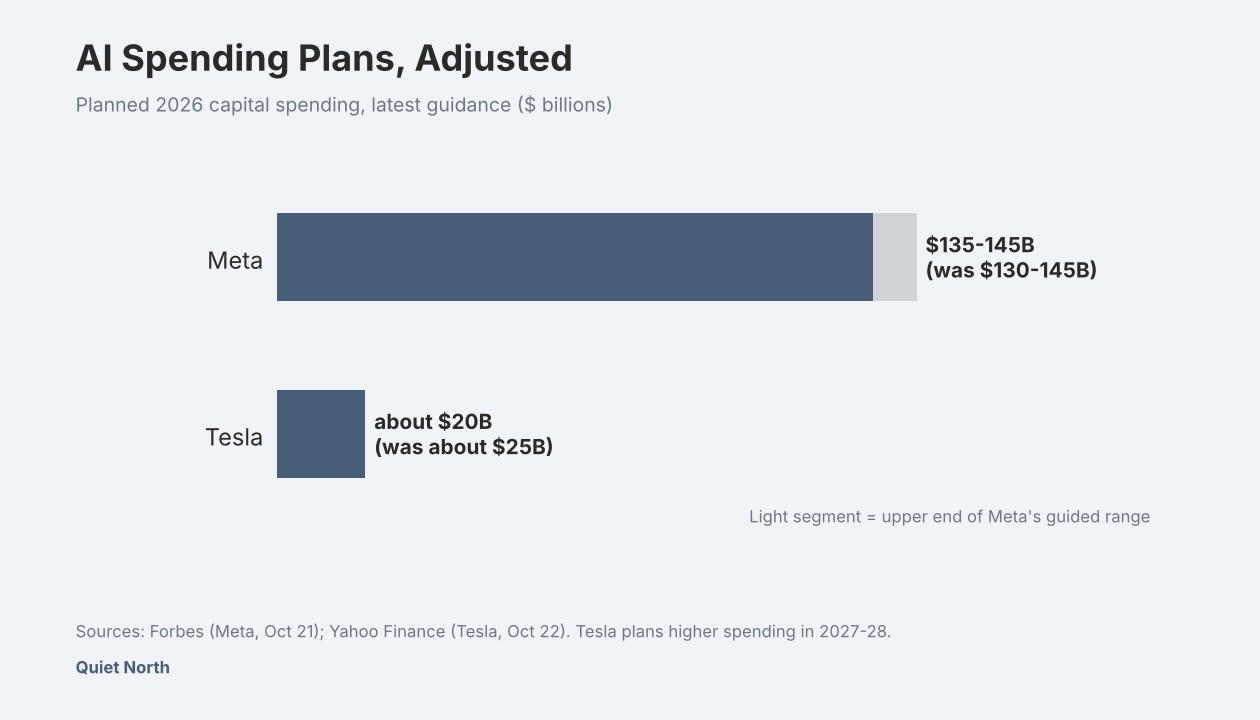
- Meta forecast $135 billion to $145 billion in 2026 capital spending, mostly for AI.

Stocks rose Wednesday, but futures point lower this morning
According to The Associated Press figures, the S&P 500 rose 0.6% on Wednesday, and the Dow rose 0.7% to 52,856.09. The Nasdaq Composite rose 1.1% to 26,702.86, and the Russell 2000 rose 0.3% to 2,781.02. For the year, the Dow is up 10.0%, the S&P 500 13.3%, the Nasdaq 14.9% and the Russell 2000 12.1%.
This morning's futures show a reversal. As of about 3 a.m. Eastern, S&P 500 futures were down about 1.0%, Nasdaq-100 futures about 1.7% and Dow futures about 0.5%, according to Investing.com. Chip stocks led the decline. Lam Research was down about 9% in early trading after its results, according to Yahoo Finance. Futures are not closing prices, and they often move before the open.
AI spending is the number to watch
Meta reported third-quarter revenue of $64.6 billion, up 26%, according to Forbes. It narrowed its 2026 capital spending forecast to $135 billion to $145 billion, from $130 billion to $145 billion, and it plans a new non-voting share class, which lets the company raise money without giving up founder control. Q3 spending alone was $34.9 billion.
Tesla beat earnings estimates, but its shares fell as investors weighed lower 2026 spending, about $20 billion, against higher planned spending in 2027 and 2028. IBM raised its full-year cash flow forecast. SpaceX reported results on Tuesday that beat estimates, according to Bloomberg, and Elon Musk said Tesla and SpaceX formed committees to discuss a possible merger. No deal has been announced.
The financing side matters for rates. Treasury sold $13 billion of 20-year bonds on Wednesday at a yield of 5.469%, according to XTB. The 10-year yield was about 5.0% this morning, according to Investing.com and Yahoo Finance. Investing.com listed jitters over debt-funded AI infrastructure spending and high borrowing costs among the factors this morning, and Deutsche Bank noted that the drop in futures suggests not all investors were reassured by the earnings.
Oil reached a five-month high, and winter heating costs are in view
Brent crude rose $3.19, or 2.9%, to $112.01 a barrel at 1311 GMT, the highest since May 18, according to Reuters. WTI rose 2.5% to $99.56. Houthi strikes hit Saudi targets on Wednesday, including an airport in Dammam and an oil field, Aramco told staff at its Dhahran headquarters to work remotely, and ships were hit in the Gulf.
Some pressure is being offset. Morgan Stanley estimates Middle East crude exports are about 17 million barrels a day, above pre-conflict levels, according to Reuters. The administration is offering to loan up to nearly a third of the one-million-barrel U.S. heating oil reserve to contain prices.
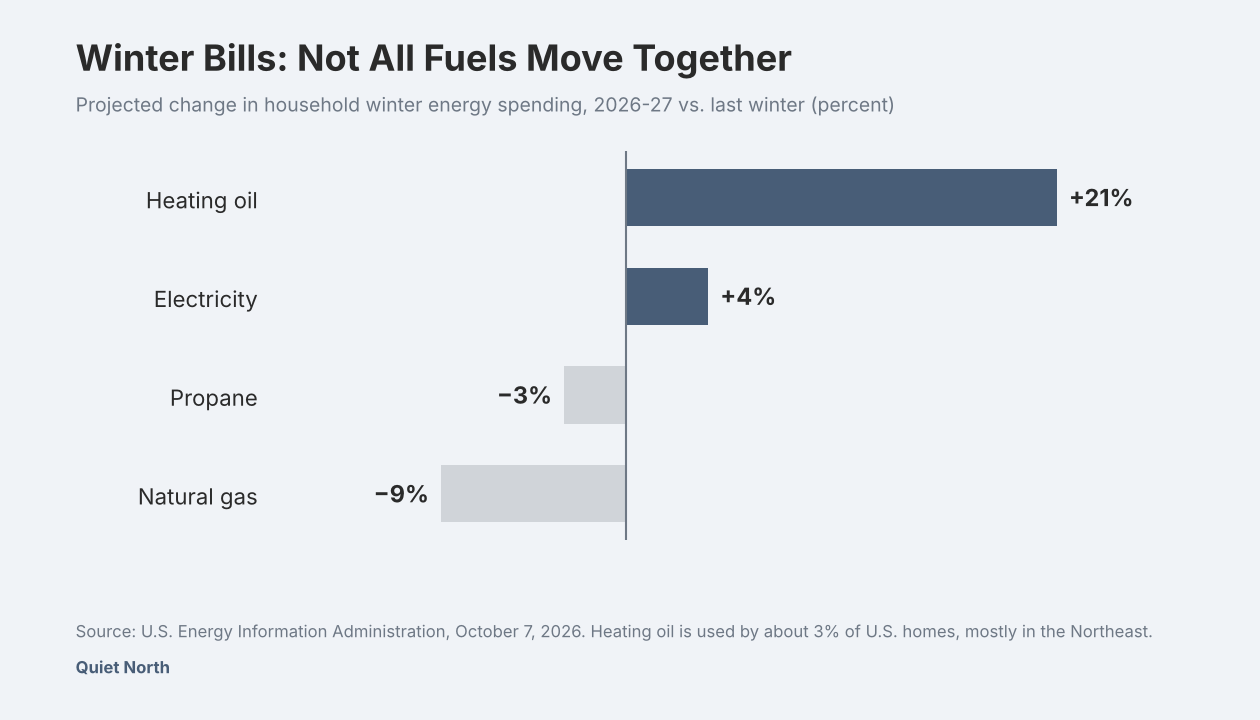
The U.S. Energy Information Administration projected on October 7 that household winter spending would change by different amounts, depending on the fuel:
- Heating oil: up 21%, mostly in the Northeast
- Electricity: up 4% on average
- Natural gas: down 9%
- Propane: down 3%
Energy costs will therefore reach households unevenly this winter.
Gold fell as oil rose
Gold's role as a safe haven is not always visible day to day. December gold futures opened at $4,159 and fell to about $4,067.50, down about 2%, by 10:21 a.m. Eastern, according to Yahoo Finance. The report says gold is down about 5% from a month ago and attributes the move to inflation concerns from higher oil. Silver also fell more than 3%.
Higher oil can raise inflation worries, which can raise expectations for rates and Treasury yields. Gold pays no interest, so higher yields give investors a competing option. That reasoning is common but not certain, and the moves can reverse.
On the calendar:
- 8:30 a.m. Eastern today: weekly jobless claims, which economists expect near 200,000.
- Today: Freddie Mac's weekly mortgage rate, last at 7.40% on October 15.
- Friday, October 23: S&P Global purchasing managers' surveys and the University of Michigan's inflation expectations.
- October 27 and 28: the Federal Reserve meets.
🔍 What This Means For You
- A positive day can reverse overnight. Wednesday's gains were followed by sharply lower futures.
- AI spending is large and financed in several ways. Meta alone expects $135 billion to $145 billion this year.
- Energy costs are uneven. Heating oil is projected up 21% this winter, while natural gas is projected down 9%.
- Gold's role is not one-directional. It fell 2% while oil rose.
- Treasury yields near 5% are part of every story. They affect borrowing costs, gold and stock valuations.
❓ Today's question
"Why would gold fall when there is conflict in the Middle East?"
Gold is often called a safe haven, but its price responds to more than headlines. It pays no interest, so when Treasury yields rise, holding gold costs investors the income they could otherwise earn. A stronger dollar can also weigh on it. Higher oil can push inflation worries and rate expectations up, which can outweigh safe-haven demand on a given day. One day's move does not settle the longer picture, and the reasons are still debated.

On a morning like this one, most of the numbers are still moving. What helps is knowing which are closing prices, which are futures and which are forecasts.
Nothing here requires a quick reaction. The next confirmed data points come at the close, and the Federal Reserve meets in five days. 🔔
Regards,
David Ellison
Found this information useful?