
Yields eased, gold rebounded: a calm look at Wednesday


🔵 U.S. stock futures were higher early this morning, Wednesday, November 4, the day after the midterm elections. Dow futures were up about 1.4%, S&P 500 futures about 1.0% and Nasdaq futures about 0.5%, according to BNN Bloomberg. Treasury yields and the dollar were lower, gold was back above $4,000, and oil was falling on signs of diplomacy with Iran.
Here is a briefing on how markets are responding, what the latest data shows, and what remains uncertain. Early-morning figures are not closing prices and may change by the 4:00 p.m. Eastern close.
Key points
- Democrats won the House, and CBS News projects they will also control the Senate, according to FinanceFeeds. Final counts may still be updating.
- The 10-year Treasury yield was near 4.9% this morning, after closing Tuesday at about 4.95%, per Capp Notes and Fortune.
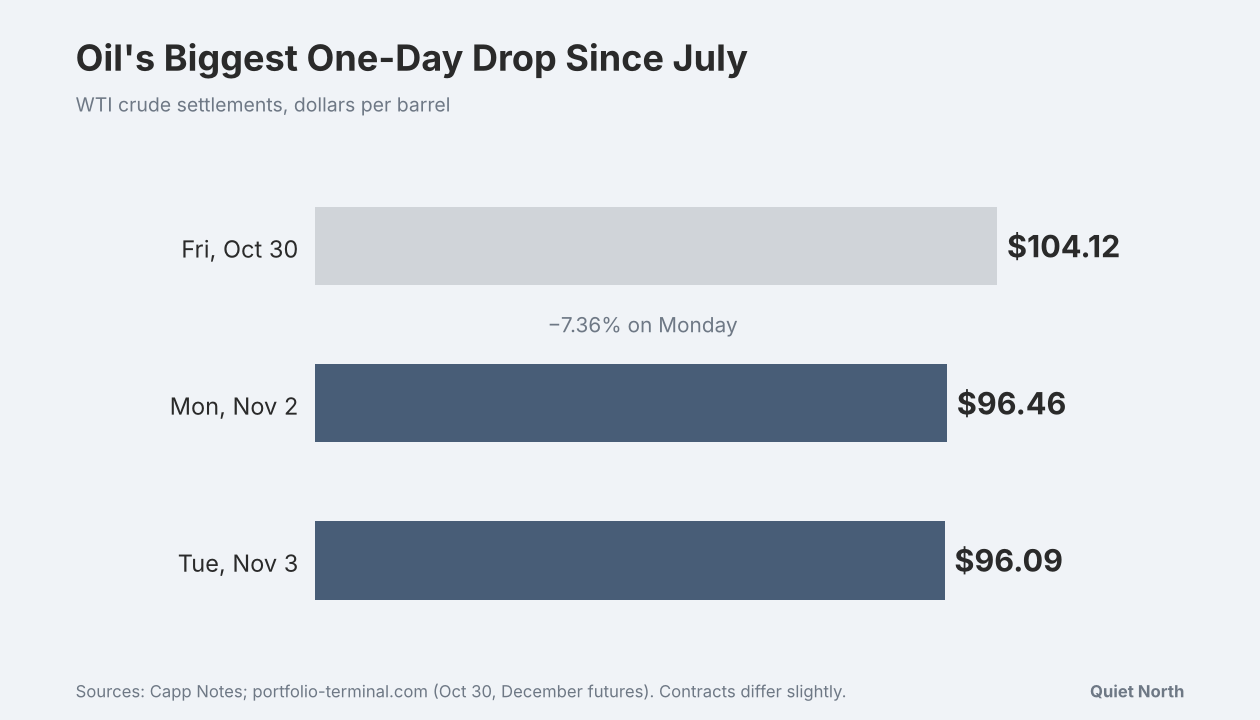
- WTI crude fell 7.36% on Monday, November 2, to $96.46, its biggest one-day drop since July 27.
- Gold rose roughly 2% to 3% in early trading, back above $4,000, as the dollar fell.
- Odds of a December Fed rate increase were about 77% to 78%, according to CME FedWatch as reported by Schwab and FinanceFeeds.

Markets: two days, different leaders
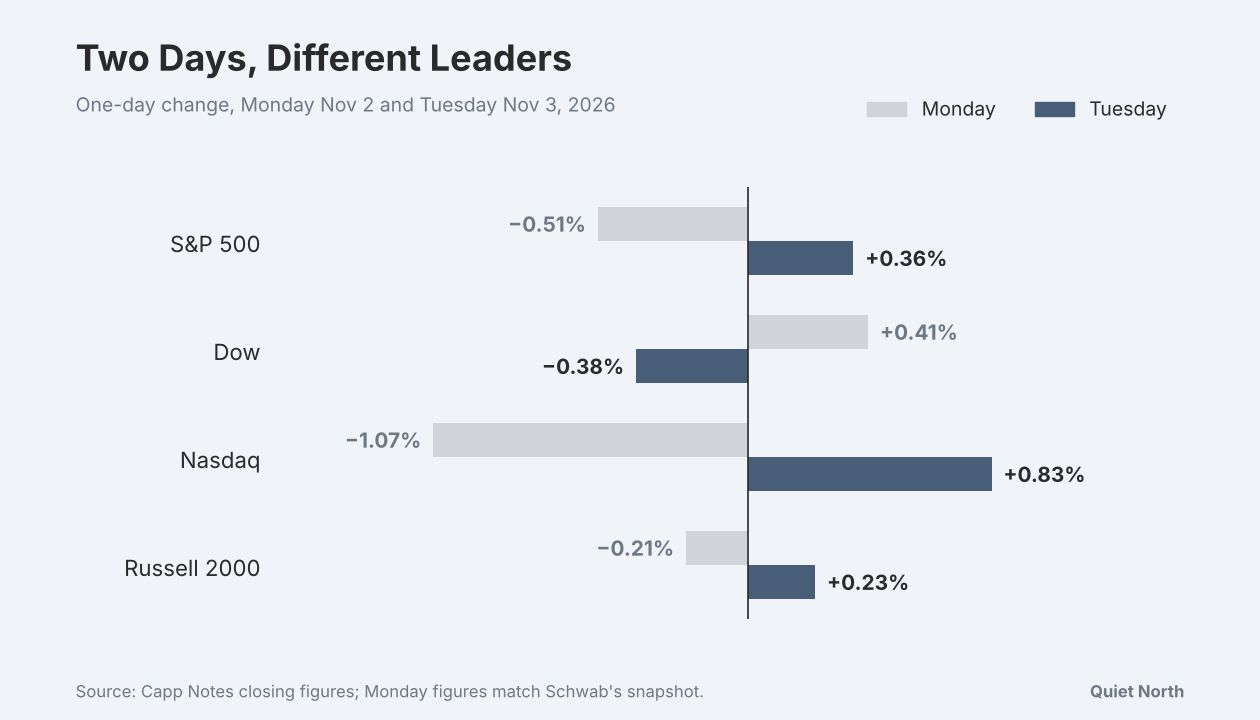
The first two days of the week looked different from each other. On Monday, the S&P 500 fell 0.51% to 7,541.40 and the Nasdaq fell 1.07%, while the Dow rose 0.41%. On Tuesday, those leaders reversed: the S&P 500 rose 0.36% to 7,568.92 and the Nasdaq rose 0.83%, while the Dow fell 0.38% to 51,786.72, according to Capp Notes closing figures.
Apple weighed on the Dow on Tuesday, falling about 1.9% after a margin forecast that worried investors. AMD rose about 5.7% in premarket trading today after beating third-quarter estimates, according to TheStreet. AI spending still drives the mood. Some Asian markets dipped this morning on concern that a new Congress could scrutinize data-center expansion, according to BNN Bloomberg.
The election, in market terms
Analysts quoted this morning are cautious about near-term effects. Stephen Brown of Capital Economics said the result "does not change too much for the near-term policy outlook," noting that Democrats still lack a filibuster-proof Senate majority and the president keeps veto power. UBS's Paul Donovan said "fiscal gridlock seems the likely default." UBS's Mark Haefele warned of near-term volatility in technology, where regulatory scrutiny is a risk.
For bonds, Deutsche Bank's Jim Reid said divided government makes large new fiscal stimulus harder to pass, which has eased some deficit worries, according to Fortune. Fortune noted that federal deficits run about 6% to 7% of GDP and annual interest on the national debt exceeds $1 trillion. Current government funding expires December 11, a date that markets may watch.
Those are interpretations, not outcomes. Policy results depend on what Congress and the White House actually do.
Yields, the dollar and gold
Treasury yields rose slightly Tuesday, then fell early today. According to Capp Notes, the 10-year closed Tuesday at 4.95%, the 2-year at 4.61% and the 30-year at 5.32%. This morning the 10-year moved toward 4.9%, and the 30-year dropped below 5.3%, per Fortune. The dollar index fell to about 101.5, from 101.87, FinanceFeeds reported.
Gold's role was visible in early trading. December futures were up about 2% to 3%, between roughly $4,027 and $4,053 depending on the source, after a weaker dollar and falling yields. Gold pays no interest, so it often rises when yields and the dollar fall, though that link does not always hold. It fell below $4,000 on Friday, October 30, so today's move is a rebound.
Fed expectations have not changed much. About a 77% to 78% chance of a December increase remains priced in.
Oil fell on diplomacy, but the strait remains a risk
Oil dropped sharply on Monday after the U.S. and Iran signaled openness to talks. WTI settled at $96.46, down from $104.12 on Friday, and Brent fell about 7.6% to $104.77, according to Capp Notes. Tuesday brought more mixed news: reports of a U.S. strike on Iran's Qeshm Island, and Qatar-brokered talks that a senior Iranian official said remain far from a deal. WTI settled at $96.09 on Tuesday, and early today it was about $95.27, TheStreet reported.
Iran's Revolutionary Guard also said four oil tankers caught fire after striking mines, according to the same report. That is a claim, not a confirmed account. Energy costs remain tied to events that can change by the hour, and a lower crude price takes time to show up at the pump.
The economy: firm demand
Tuesday's data was solid. According to Capp Notes, the September JOLTS report showed job openings of 7.523 million, above the 7.15 million forecast, and factory orders rose 1.8%, above the 1.3% expected. The Institute for Supply Management's manufacturing index rose to 55.5 in October from 54.5, its tenth straight month above 50, which signals expansion.
Strong data keeps the Fed's options open. The October jobs report arrives Friday, November 6.
🔍 What This Means For You
- Markets are weighing policy, not reacting to it. Analysts expect little near-term change.
- Yields are still near 5%. The 10-year was about 4.9% this morning, still close to the 5% mark.
- Oil is volatile. WTI fell more than 7% in a day, and Iran news can reverse it.
- Gold rose as the dollar fell. Its link to yields is common but not constant.
- Friday's jobs report is the next major data point. December Fed odds sit near 77% to 78%.
❓ Today's question
"Why did bond yields and the dollar fall after the elections?"
When investors expect divided government, they may assume fewer large new spending or tax measures, which can ease worries about heavy Treasury borrowing. Lower expected borrowing can raise bond prices and lower yields. The dollar also fell, which helped gold. Yields fell on Monday too, when oil dropped, so several forces were at work. These are market explanations, and they may not hold if events change.

A morning with a large political event can make every number look dramatic. Most of the figures above are early quotes, and the final ones will arrive at the close.
Until Friday's data, separating what is confirmed from what is projected is a steadier way to read the news. 🔔
Regards,
David Ellison
Found this information useful?